The Good, The Bad and The Ugly.
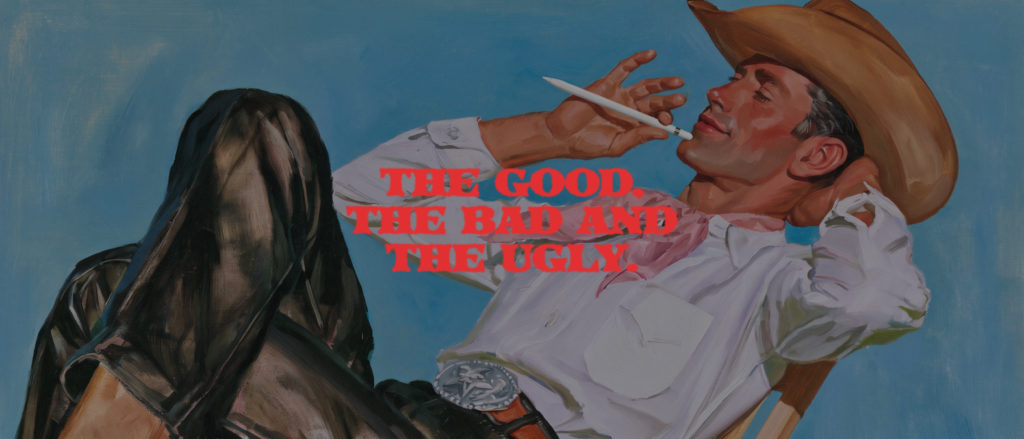
When a branding agency shows you three options, you already know how the film ends.
Picture the scene. The agency arrives, dims the lights and reveals three routes. Everyone leans forward, the presenter pauses for effect, and then comes the question that has quietly ended more good ideas than any budget cut: “So, which one do you prefer?” It’s a lovely moment. It’s also the wrong question.
Three options? Run.
Look closely and the three routes nearly always follow the same script. There’s the Good: the one the agency actually believes in, often presented second so it has room to shine. There’s the Bad: the bold route, pushed just far enough to make the others look reasonable. And there’s the Ugly: the safe compromise, borrowing a little from each, built for diplomacy rather than distinction. It’s a classic western without the Morricone soundtrack, and the client is standing in the middle of the standoff, wondering which way to draw.
Either way, the hardest part of the job has just landed back on your desk, dressed up as collaboration. And clients choose the way people choose: by taste, by comfort, by whatever feels least like a risk in front of the board. More often than not, they ride off with the Ugly, the one nobody hated. That isn’t the same thing as the one anybody will remember, and it’s how brands end up sensible, well executed and completely invisible.
The chef doesn’t ask
You don’t ask the chef whether to use butter or olive oil. You don’t ask the surgeon where to make the cut, or the architect which way the staircase should turn. You hire them precisely so you won’t have to know. Their value lies not only in what they can do, but in the hundreds of small decisions they make before anything reaches you, and in the confidence to stand behind them. Branding should work the same way. Yet somewhere along the line, our industry decided that handing over the choice was a form of respect.
“What a branding agency owes you is a decision, not a menu.”
One proposal, a thousand attempts
We present one proposal. Not because we only tried one, but because we tried everything else first. The standoff still happens, it just happens in our studio, weeks before you arrive. Behind that single proposal sit dozens of directions, hundreds of sketches, typefaces tested and dropped, colours that looked brilliant on Tuesday and wrong by Wednesday. There are ideas we loved and killed because they answered the wrong question. The kitchen is organised chaos. The plate isn’t.
What reaches the table is the Good, and only the Good. It’s the version that survived all of it, the one we can defend line by line against your strategy, your market and, above all, your audience. Not the one we like best, but the one that works best. That’s the job as we see it: explore everything, then have the nerve to choose.
Not take it or leave it
None of this means take it or leave it. One proposal is the start of a conversation, not the end of one. We’ll challenge it with you, test it against real situations, sharpen it and push it further until it holds. What we won’t do is hand you three menus and ask you to cook. Some clients find that unsettling at first, with no plan B on the table and no safety net. Then something shifts: the conversation stops being about which option they like and becomes about whether it’s right.
So if an agency shows you three options, by all means enjoy the show. Then ask them which one they’d choose. If they can’t answer, you have yours.